The March sisters give up their Christmas breakfast
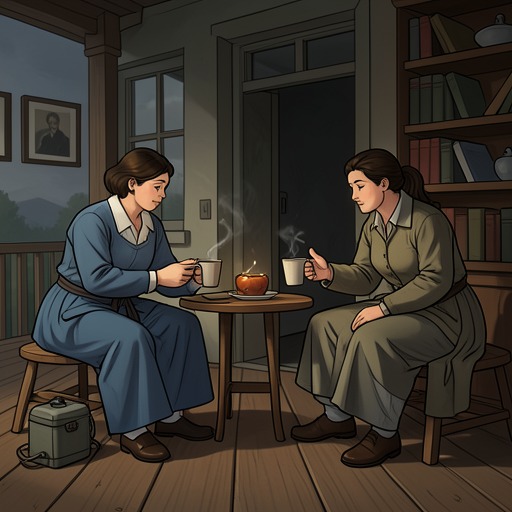
Little WomenThe March sisters give up their Christmas breakfast in one of the defining domestic acts of Little Women: hungry themselves and expecting a rare holiday treat, they surrender the meal to a poor family whose deprivation is immediate and life-threatening. The episode makes charity concrete rather than abstract, showing how the sisters’ small resources, coordinated labor, and willingness to go without create warmth, food, and dignity for strangers.
Causes and Background
The sacrifice grows out of the family’s wartime poverty and moral discipline. The sisters have little money, and their father is far away serving as a chaplain because he is too old to be drafted and not strong enough to serve as a soldier. Jo wishes she could go to the army as a drummer or nurse, while Meg explains that their mother has proposed giving up Christmas presents because the winter will be hard for everyone and men in the army are suffering. The girls cannot materially change the war, but they can make small sacrifices gladly.
Their discussion also establishes the emotional pressure behind the meal. Amy objects that some girls possess many pretty things while others have none, Beth answers that the family still has Father, Mother, and one another, and Jo reminds them that Father is absent and may be gone for a long time. The breakfast therefore arrives amid deprivation, longing, and uncertainty; it is not an insignificant luxury to children who have waited for it, but a genuine pleasure they must decide whether to retain or relinquish.
What Happens
Before the meal begins, Mrs. March tells her daughters about a nearby family in desperate need. A mother lies sick with a newborn baby, six children are huddled together in one bed to keep from freezing, there is no fire, and the oldest boy has come to report that they have neither food nor warmth. She asks the girls to give the family their breakfast as a Christmas present.
The response is immediate. Jo is glad that the request comes before they have begun eating, Beth eagerly asks to help carry the provisions, Amy heroically gives up the cream and muffins she likes best, and Meg covers the buckwheats and gathers the bread onto one large plate. Mrs. March, satisfied by their decision, promises that they will have bread and milk when they return and make up the meal at dinnertime. The sisters do not merely donate food from a distance: they accompany their mother through the back streets, taking part in the delivery and the work of relief.
The family’s room is bare and miserable, with broken windows, no fire, ragged bedclothes, a sick mother, a wailing baby, and pale, hungry children sharing one old quilt. The girls’ arrival changes the atmosphere at once. The children stare with big eyes and smile despite their blue lips, while their mother cries that good angels have come. Jo lightens the scene by calling them funny angels in hoods and mittens, turning the visitors’ awkwardness into shared laughter.
The relief depends on collective labor. Hannah brings wood, makes a fire, and blocks the broken panes with old hats and her own cloak. Mrs. March gives the mother tea and gruel, promises further help, and dresses the baby tenderly. The sisters set the table, seat the children around the fire, and feed them. Their abandoned breakfast becomes heat, nourishment, nursing, clothing, and companionship rather than a single charitable gesture.
Consequences and Aftermath
The recipients respond with grateful cries in German as they eat and warm their hands at the fire, calling the sisters angel children. The praise is especially pleasing to Jo, who has been treated as a rough or comic figure since birth rather than as an angelic one. The scene thus supplies not only physical relief but also a moment in which the sisters’ intentions are recognized and their family identity is enlarged through service.
The girls themselves remain hungry, receiving only bread and milk after returning, yet the narrative presents them as unusually happy. Their pleasure comes from seeing comfort left behind in the poor room, not from the meal they missed. When they later arrange their own presents, Meg identifies the act as loving one’s neighbor better than oneself. The few gift bundles may not look splendid, but they contain a great deal of love, and the domestic celebration retains its emotional richness despite the absence of abundance.
The breakfast establishes a pattern that extends beyond Christmas. When a telegraph later reports that Mr. March is gravely ill, Mrs. March immediately organizes the family around practical care: she gathers supplies, asks for wine, prepares a trunk, and leaves for Washington to nurse him. Before departing, she tells the daughters to continue their work, keep busy, and remember that they will never be fatherless. The Christmas sacrifice and the later nursing crisis both define love as active service carried out under pressure rather than as passive feeling.
Narrative and Thematic Significance
The event joins private family affection to the public crisis of the Civil War. Mr. March’s absence and service give the sisters’ household sacrifice a national context, but the episode refuses grand gestures in favor of food, firewood, clothing, nursing, and shared time. The girls’ limited means do not make their action worthless; instead, the narrative measures moral significance by willingness and usefulness rather than by financial scale.
The episode also presents the March household as a school of ethical formation. Mrs. March gives the instruction, but the sisters interpret and enact it differently: Beth offers eager service, Amy relinquishes the food she most desires, Meg organizes the meal, and Jo supplies both impulsive enthusiasm and humor. Their distinct temperaments become complementary forms of care. The hungry children are not reduced to an object of pity, because the encounter develops into reciprocal human contact through laughter, gratitude, and work.
Finally, the altered breakfast embodies the book’s recurring contrast between material poverty and emotional abundance. The March sisters possess few presents and little food, yet they can create a warm, lively household and extend that warmth into a room without fire. Their Christmas becomes meaningful precisely because they surrender the pleasure they had been waiting for. In this structure, sacrifice is not a grim subtraction from happiness; it is the action that converts limited possessions into fellowship and gives the holiday its deepest significance.